
After World War I, the United States and its allies sought arms control solutions to what were political problems. Proposals such as a ban on war and restrictions on the size of naval vessels and army divisions were adopted. These efforts came to naught by 1936, when Germany began its aggressive march across Europe.
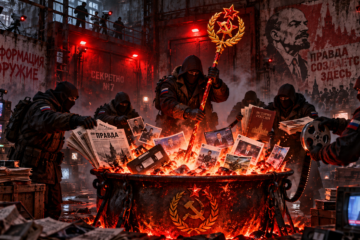
After World War II, both Japan and Germany became allies of the United States while the Soviet Union became a serious enemy. Most importantly, the Soviet Union established in Eastern Europe an alliance of nations under the Warsaw Pact. Thus, a decades-long Cold War began.
It was widely assumed that the collapse of the Soviet Union heralded an era of global cooperation and the end of great power competition and conflict. Arms control brought about the Intermediate Nuclear Forces Treaty (INF), Strategic Arms Reduction Treaty (START I and II) and the Conventional Forces in Europe Treaty (CFE) agreements.
Today, however, as many military and diplomatic experts conclude, the dangers facing the United States and its allies are more complex and more serious than perhaps at any time since the end of WWII. Now, more than ever, arms control remains elusive.
Nuclear conflicts are now among the most serious potential dangers, including proliferation of nuclear weapons, the pending end to formal strategic arms limits, and the actual use of theater nuclear force arising out of existing conventional conflicts.
To lessen such dangers, nuclear abolitionists proffer numerous arms control proposals. Six ideas are most common: (1) a policy of no first use of nuclear weapons; (2) adoption of a “minimum deterrent” nuclear strategy; (3) the elimination of intercontinental ballistic missiles (ICBMs); (4) a unilateral freeze of US nuclear force development; (5) an extension of New START nuclear arms limits; and (6) abandonment of any new theater nuclear forces such as the nuclear sea-launched cruise missile (SLCM-N) or the sea-launched cruise missile. All of these strategies harm American and allied security and make worse the strategic nuclear balance.
The US extended deterrent has, for 70 years, rested on the option of using nuclear force to stop massive conventional attacks on US forces and allies overseas. Depending on the regional military balance, such nuclear extended deterrent options were, and remain, viewed by our allies as central to keeping their nation safe from Soviet/Russian and Chinese aggression.
Minimum deterrence strategies assume the only retaliatory targets the US needs to hold at risk are adversary cities where a few hundred nuclear warheads are all that is needed to deter. This doctrine assumes Russia and China will be completely deterred by the fear of losing large numbers of their civilian population. But this ignores the fact that these regimes murdered millions of their own people to gain power—showing little value for human life. Even worse, a minimum deterrence strategy would also leave alive the leaders of such nations as well as their nuclear and conventional forces with which they will commit aggression.
Cutting out the land-based ICBM force and a third of the ballistic missile submarine force would unilaterally reduce the US strategic nuclear force to around 500 at-sea on-alert warheads. This would be only a third of the allowed New START treaty force and give an 8 to 1 to 18 to 1 Russian and Chinese advantage in nuclear weapons, respectively. This would ensure that both nations frequently use nuclear weapons for coercion and blackmail.
A freeze on American nuclear force development would be a deterrence disaster. The US has not yet fielded any portion of the modernized triad, which is not rusting into obsolescence. Russia has completed over 90 percent of its own modernization and China is well on its way to tripling the size of its nuclear force over the next decade. Neither would participate in a unilateral freeze. Again, the United States would face a far superior adversary.
An extension of New START sounds attractive but would be harmful to American interests. It would delay any needed uploading of American warheads. It would not affect or make transparent China’s breathtaking nuclear build-up. And without a sea change in Russian behavior, verifying current arms limits would still be impossible, given the past five years of treaty violations by Moscow.
The Congressional Strategic Posture Commission report of October 2023 emphasized the urgency of rebalancing the current gap in US regional nuclear forces. The SLCM-N and better theater air deterrence were key recommended upgrades, both of which would be eliminated by a number of these proposals. It is precisely this deterrence gap which Moscow has leveraged to limit US and allied assistance to Ukraine.
The restraint these arms control ideas wish upon the US military assumes that Russia and China will reciprocate. But in the multiple decades after the end of the Soviet Union, massive US restraint was eventually met with what Admiral Richard has described as a “breathtaking” Chinese build-up and a near matching Russian modernization. As former Secretary of Defense Harold Brown once warned, “We build, they build. We stop; they build.”
Now is the time to reject nuclear abolition for what it is, a purposeful effort to weaken the United States. American lives and freedom depend on it.
Peter Huessy is Senior Fellow at the National Institute for Deterrence Studies. Views expressed are his own.


About the Author

Peter Huessy
Mr. Peter Huessy is President of his own defense consulting firm, Geostrategic Analysis, founded in 1981, and through 2021, Director of Strategic Deterrent Studies at the Mitchell Institute on Aerospace Studies. He was the senior defense consultant at the National Defense University Foundation for 22 years. He was the National Security Fellow at the AFPC, and Senior Defense Consultant at the Air Force Association from 2011-2016.
Mr. Huessy has served as an expert defense and national security analyst for over 50 years, helping his clients cover congressional activities, arms control group efforts, nuclear armed states actions, and US administration nuclear related policy, budgets, and strategies, while monitoring budget and policy developments on nuclear deterrence, ICBM modernization, nuclear arms control, and overall nuclear modernization.
He has also covered nuclear terrorism, counterterrorism, immigration, state-sponsored terrorism, missile defense, weapons of mass destruction, especially US-Israeli joint defense efforts, nuclear deterrence, arms control, proliferation, as well as tactical and strategic air, airlift, space and nuclear matters and such state and non-state actors as North Korea, China, Iran, Syria, Venezuela and Hezbollah, Hamas, and Al Qaeda. This also includes monitoring activities of think tanks, non-governmental organizations, and other US government departments, as well as projecting future actions of Congress in this area. His specialty is developing and implementing public policy campaigns to secure support for important national security objectives. And analyzing nuclear related technology and its impact on public policy, a study of which he prepared for the Aerospace Corporation in 2019.