
Published: June 11, 2026
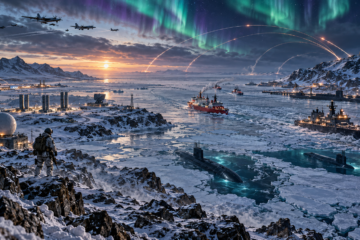
The Strait of Hormuz crisis and the continuing crisis in the Bab al-Mandab Strait have shown that narrow maritime passages can and will be used as political weapons in future conflicts. The state actors in Tehran and the non-state actors in Sanaa, however, may not be the only ones that may leverage these choke points in future. For example, Oman’s ports could present an essential part of any land route alternatives like the India-Middle East-Europe Economic Corridor (IMEC) that avoid both the Gulf of Aden and the Strait of Hormuz. However, they have also faced drone attacks in the current war and will likely face political instabilities in future. An alternative that has come into greater focus is the North Sea Route (NSR) or the Arctic route. Surprisingly, recent reductions in Arctic ice levels have increased the feasibility of using the NSR, now potentially facilitating the movement of goods.
Iran asserts its right to regulate shipping in the Strait of Hormuz. Under its 1993 law, innocent passage is subject to prior authorization based on Iran’s national security. The present crisis created by the Iran war has highlighted how the food security of many countries is connected to oil through fertilizer prices, which have witnessed a price surge. Before the war, around 30% of global fertilizers were exported by gulf countries through the Strait of Hormuz. Additionally, 20% of global liquified natural gas is used as the feedstock for making fertilizers and much traveled through the Suez Canal before the Houthis disrupted trade. While the rest of the world will face higher food prices, the Gulf countries, which import up to 85% of their food, are still affected. Asian countries like China, India, Philippines, Thailand, Vietnam, and Singapore are highly dependent on oil imports from the Middle East and must now find alternatives. In the present crisis, increased imports from the U.S. have provided relief to these countries, but the Cape of Good Hope route, needed for this transport, is time-consuming and increases costs.
The NSR is also not without its share of complex legal matters. Russia has established laws and codes for regulating passage through NSR. Russia classifies the NSR as its internal waters and does not recognize the international right of innocent passage through it. All ships need prior authorization while foreign warships must notify their intended passage 90 days in advance. Ships may be required to use the services of Russian icebreaker escorts and pilots. Russia justifies its claim under article 234 of the United Nations Convention on the Law of the Sea (UNCLOS). Known as the “Arctic Exception,” it applies to all “Ice-covered areas.” It grants coastal states the right to enforce non-discriminatory laws in their Exclusive Economic Zones (EEZ) to prevent marine pollution in the ice-covered areas. The U.S. and other countries argue that UNCLOS protects innocent passage through territorial seas and hence the Russian law is contrary to the provisions of UNCLOS.
Unlike the Middle East shipping passages, however, the NSR has been in conflict and has not had any kinetic combat or active armed conflict. The free navigation operations may operate here because the U.S. may be reluctant to indulge in hostilities against and may not be equipped to do so. Simultaneously, there may be U.S. interest in selling its oil to East, Southeast, and South Asia through this route. Russia may also find advantage in developing this route and is seeking partners to develop it. Several countries have already reached agreements with Russia to take advantage of the NSR.
Russia is already using its Arctic coast seasonally to deliver LNG from its Yamal project to Europe and Asia. With increasing arctic warming and higher investment in icebreakers, this may change to round-the-year operations. The present bonhomie between Putin and Xi Jinping had already led to the October 2025 Harbin agreement to make NSR a strategic Arctic trade corridor. NSR suits China for another reason. It reduces heavy Chinese dependence on transit through the Malacca Strait, where India is developing an island base with potential to choke that passage.
India is diplomatically very heavily invested in the Middle East and has been seeking a route to Europe through Iran and through IMEC. If India were to shift to oil and gas imports through NSR it could face strong pushback and heavy geopolitical pressure. The shift will come with another risk; the conflict zone in the Middle East will be swapped for the possible U.S.-Russian tensions in the narrow Bering Strait and make India dependent on a Sino-Russian architecture beyond its control. Even so, that scenario may still be a long way off. A positive aspect is India’s long-standing trade and military engagement with Russia that has proved its strength in crises. In December 2025, Russia and India signed an agreement formalizing Indian military access to Russia’s Arctic naval ports. Long-term contracts for oil and gas and equity participation in the Arctic infrastructure and shipping capacity may follow.
For India and Southeast Asian countries, the year-round availability of the NSR will increase overall energy resilience by creating an alternative route that will dampen price surges during the frequent Middle East crises. It will make it more feasible for these countries to tap into multiple oil and gas sources including Russia and the U.S. and, in addition, provide a faster sea route to Europe. There is also the feasibility of synergy between the energy needs of India, the ship-building capacity of South Korea, and the NSR. While the Arctic route will not be a silver bullet for Asian countries to have risk-free access to oil and gas, the shift of focus from the tropics to the North Pole shall reduce the historic leverage by the Middle East and will help keep prices and access stable even during the recurring Middle East flare-ups.
R.N. Prasher is a retired member from Indian Administrative Service (IAS). His primary expertise is in geopolitics where he has published in RealClear Defense, Asia Times, and The National Maritime Foundation. He has published the book “Geopolitics: Impact on Energy Transition and Energy Security” and has an upcoming publication “Revisiting the Chinese Screen” The views are the author’s own.