Published: June 5, 2026
Russia’s nuclear strategy occupies a central place in global security debates. With the world’s largest and most diverse nuclear arsenal and a leadership that frequently employs nuclear rhetoric, Russia’s approach to deterrence is both consequential and deeply rooted in its historical experience. Scholars often analyze Russian nuclear doctrine through the lens of post–Cold War geopolitics or contemporary military reforms, but such approaches overlook the deeper historical foundations of Russian strategic culture.
For better or worse, the origins of Russian nuclear deterrence lie in the Stalinist heritage, a political and strategic worldview forged in the crucible of revolution, civil war, industrialization, and global conflict. Stalin’s rule created the institutional, psychological, and ideological foundations that shaped the Soviet nuclear program and continue to influence Russian nuclear policy today.
Stalin’s Strategic Mindset
Joseph Stalin’s approach to security was shaped by a profound sense of vulnerability. He believed the Soviet Union was encircled by hostile capitalist powers and that survival required absolute centralization, militarization, and coercive statecraft. This worldview justified: rapid industrialization to support military power; expansion of the security apparatus; preemptive and punitive measures against perceived enemies; and readiness to accept extreme risks. Stalin’s strategic thinking fused Marxist-Leninist ideology, personal paranoia, and geopolitical realism.
Stalin believed that only an overwhelming force could guarantee the survival of the Soviet state. This belief drove the massive industrialization campaigns of the 1930s, which prioritized heavy industry, armaments, and military infrastructure. This logic later translated into the nuclear age: nuclear weapons became symbols of national greatness and instruments of political leverage. Stalin’s domestic use of terror—purges, show trials, mass repression—was mirrored in his foreign policy. He believed that intimidation could shape adversaries’ behavior.
The Soviet Atomic Project: Stalinist Governance in Science
The Soviet atomic project began during World War II, but it accelerated dramatically after the U.S. bombings of Hiroshima and Nagasaki. Stalin immediately recognized the political significance of nuclear weapons. For Stalin, nuclear weapons were not simply military tools; they were instruments of political prestige and strategic leverage. The atomic project was organized into secret research centers, such as Arzamas-16, where scientists lived under surveillance and strict information controls. This system mirrored the broader Stalinist model of compartmentalization, elite isolation, centralized oversight, and security-service dominance.
Despite postwar devastation, Stalin prioritized the nuclear program above all other sectors. Archival evidence shows that the atomic project received unlimited access to manpower, materials and funding, even during famine conditions.
This reflected Stalin’s belief that nuclear weapons were essential to state survival, international prestige, and strategic parity with the United States. Soviet espionage in the Manhattan Project was central to the rapid development of the Soviet bomb. Agents such as Klaus Fuchs and Theodore Hall provided critical information that accelerated Soviet progress. Stalin’s reliance on intelligence reflected his broader belief that security depended on outmaneuvering adversaries through covert means.
When the USSR successfully tested its first atomic bomb in 1949, Stalin’s response was characteristically understated but strategically significant. He viewed the bomb not only as a weapon of war but also as a political instrument that elevated the USSR to superpower status. This symbolic dimension remains central to Russian nuclear identity. Nuclear weapons are not merely tools of deterrence; they are markers of national greatness and geopolitical relevance.
The Evolution of Soviet and Russian Nuclear Doctrine
Stalin’s belief in overwhelming force evolved into the Soviet commitment to massive nuclear arsenals, redundant delivery systems, and the capability for assured retaliation. By the 1970s, the USSR possessed thousands of warheads, an approach rooted in Stalinist thinking about security through quantitative superiority. Stalin’s insistence on political supremacy over the military carried into the nuclear age. The Soviet command-and-control system was designed to ensure that only the top political leadership could authorize nuclear use. Modern Russia’s “nuclear briefcase” (cheget) is a direct institutional descendant of this model.
For Stalin, industrial and military achievements were markers of national greatness. Nuclear weapons became the ultimate symbol of superpower status. This symbolic dimension remains central to Russian identity and foreign policy, as seen in Vladimir Putin’s emphasis on “invincible” new nuclear systems. Russian leaders continue to view the world as a hostile environment in which Western powers seek to weaken or encircle Russia. This worldview, rooted in Stalin’s belief in external hostility, justifies reliance on nuclear deterrence as the ultimate guarantor of sovereignty. Russia’s willingness to threaten limited nuclear use to compel adversaries to back down reflects a Stalinist belief in the coercive power of fear. Putin’s nuclear signaling by alerting forces, showcasing new systems, and issuing veiled threats echoes Stalin’s use of intimidation as a diplomatic tool. As Leon Aron has noted:
Russia’s resorting to a nuclear strike to terminate a conventional conflict that was not going its way became known as an “escalate to de-escalate” theory. Intended to scare the enemy and coerce armistice rather than inflict massive damage and precipitate an open-ended strategic nuclear exchange, a “de-escalation” is likely to involve low-yield tactical weapons detonated away from densely populated areas.”
Such an approach involves deterrence as ustrashenie (a sense of intimidation or scaring) rather than deterrence as sderzhivanie (a sense of holding back or restraining). Thus, one enduring Stalinist inheritance is psychological rather than doctrinal. This aspect includes security through strength, instead of trust; fear as a legitimate instrument of statecraft; occasional acceptance of extreme risk; and ambiguity as strategy. These attitudes shape how Russian leaders interpret international crises and how they wield nuclear threats.
Conclusion
Russia’s nuclear deterrence strategy is not merely a product of modern geopolitics or technological capability. It is also at least partly the continuation of a Stalinist worldview that equates security with dominance, deterrence with fear, and state survival with centralized, militarized power. Understanding this heritage is essential for interpreting Russia’s behavior today—from its latent and manifest use of coercive nuclear strategy to its insistence on maintaining a vast and diverse nuclear arsenal.
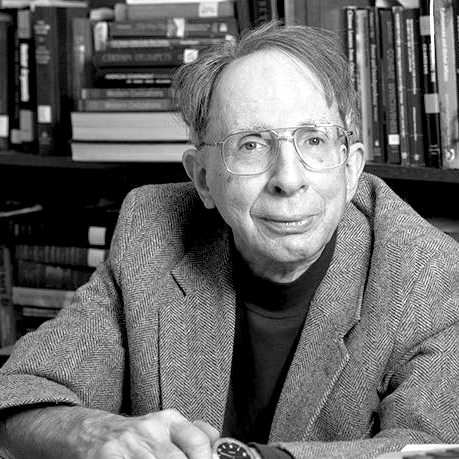
Stephen J. Cimbala is Distinguished Professor of Political Science at Penn State Brandywine and the author of numerous works on nuclear deterrence, arms control, and military strategy. He is a senior fellow at NIDS and a recent contributor to the Routledge Handbook of Soviet and Russian Military Studies edited by Dr. Alexander Hill (Routledge: 2025). The views of the author are his own.



About the Author

Stephen Cimbala
Dr. Stephen Cimbala is Distinguished Professor of Political Science at Penn State university, Brandywine. He is currently a senior fellow with the National Institute for Deterrence Studies.