
Published: April 14, 2026
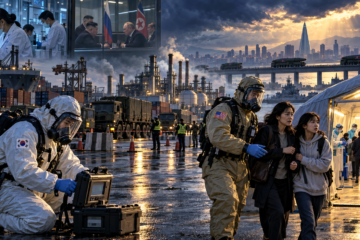
For more than half a century, U.S.–Russian nuclear arms control has served as a central mechanism for managing strategic competition. Beginning with the 1972 Strategic Arms Limitation Talks (SALT I), successive agreements institutionalized transparency, predictability, and mutual restraint. New START, which entered into force in 2011, represents the culmination of this bilateral architecture. Its limits on deployed strategic warheads and delivery systems, combined with an intrusive verification regime, helped sustain stability even as geopolitical relations deteriorated.
However, Russia’s suspension of participation in 2023 and the treaty’s expiration in 2026 mark a significant turning point. The breakdown of the broader arms control framework—evident in the demise of the Anti-Ballistic Missile (ABM) Treaty in 2002, the Intermediate-Range Nuclear Forces (INF) Treaty in 2019, and the Open Skies Treaty in 2020—suggests a structural shift in the valuation of negotiated restraint. Assessing the prospects for post–New START arms control, it is important to consider these developments within both the historical context of bilateral relations and the shifting dynamics of current great power competition.
Academic debates on arms control offer a helpful context for understanding the current impasse. Traditional arms‑control theory, rooted in rationalist models, views treaty agreements as tools for reducing uncertainty, preventing arms races, and stabilizing deterrence. From this perspective, verification mechanisms and numerical limits mitigate the security dilemma by reducing incentives for worst‑case planning. While other scholars emphasize the role of domestic politics, bureaucratic interests, and leadership perceptions. Arms control agreements often reflect internal political coalitions, institutional preferences, and the ideological orientation of decision makers. The current U.S.-Russian environment, which is characterized by mutual suspicion and nationalist rhetoric complicates the formation of pro-arms control coalitions. Moreover, constructivist analyses highlight the normative dimension of arms control, arguing that treaties shape expectations, legitimize restraint, and embed cooperative practices. The erosion of these norms over the past decade has contributed to a broader delegitimization of negotiated limits.
These theoretical perspectives underscore that the challenges facing post–New START arms control are not merely technical but deeply embedded in political and normative contexts. The war in Ukraine has fundamentally reshaped U.S.-Russian relations. Moscow’s framing of the conflict as a confrontation with the West, combined with U.S. and allied NATO support for Ukraine, has created a political environment in which formal negotiations are viewed as strategically risky or politically unacceptable.
The U.S. seeks to address Russia’s large arsenal of non‑strategic nuclear weapons and its development of novel systems such as nuclear-powered cruise missiles and hypersonic glide vehicles. Russia, in turn, prioritizes constraints on U.S. missile defenses and long-range conventional strike capabilities. These asymmetries complicate the search for mutually acceptable trade-offs. Furthermore, verification has long been a cornerstone of bilateral arms control. Russia’s suspension of inspections and data exchanges under New START has undermined transparency and raised questions about the feasibility of future verification regimes. Designing agreements that satisfy both sides’ security concerns will be a central challenge.
The U.S. increasingly argues that future arms control must account for China’s expanding nuclear arsenal. Russia rejects trilateral frameworks, viewing them as attempts to dilute U.S.–Russian parity. Thus far, China shows little interest in formal arms control negotiations. This triangular dynamic introduces new complexities absent from earlier bilateral negotiations.
Despite the hostile political environment, arms control still matters. The strategic reasons for arms control include specific factors that deserve attention from states. Agreements reduce incentives for preemption and miscalculation, which can increase crisis stability. Data exchanges and inspections improve transparency by reducing uncertainty and reliance on worst-case assumptions. Arms races can impose significant economic burdens, even for the U.S.’ trillion-dollar defense budget and Russia’s constrained economy. Finally, U.S.–Russian cooperation reinforces the legitimacy of the global nonproliferation regime. These lasting incentives suggest that both states have structural reasons to pursue at least minimal engagement.
So, what are the pathways for Post–New START arms control? Political commitments to maintain New START limits, even without a formal treaty, could involve both sides making parallel political statements to uphold New START’s numerical limits. While these have no legal force, such commitments could help prevent rapid nuclear arsenal expansion and maintain stability and predictability.
Other paths could include more Issue‑Specific or Modular Agreements. Rather than pursuing a new comprehensive treaty, negotiators could focus on discrete issues, such as notifications of major strategic exercises, transparency measures for new strategic systems, and agreements to avoid dangerous military incidents. These modular arrangements could serve as building blocks for more ambitious frameworks. Next, revitalizing crisis‑management mechanisms by reestablishing military-to-military communication channels could reduce the risk of inadvertent escalation. Such mechanisms do not require treaty-level negotiations and can function even amid broader political tensions. Finally, promote multilateral and norm-building initiatives such as broader dialogues involving China, NATO allies, and other nuclear-armed states to help shape norms around transparency and risk reduction. Multilateral workshops, data exchange initiatives, or voluntary reporting mechanisms may be more practical than formal treaties.
The expiration of New START marks a critical turning point in the history of U.S.–Russian nuclear arms control. The structural, political, and technological challenges facing a successor agreement are formidable, and a new comprehensive treaty is unlikely in the near term. Yet the logic of arms control, rooted in the need to manage existential risks, remains important. Incremental, issue-specific, and politically binding measures offer a pragmatic path forward, preserving essential elements of strategic stability until conditions allow for more ambitious negotiations. The future of arms control will depend not only on geopolitical developments but also on policymakers’ ability to adapt traditional frameworks to a more complex, multipolar nuclear landscape. Without some form of negotiated restraint, the world risks entering an era of unconstrained nuclear competition for the first time in over half a century.
Stephen J. Cimbala is Distinguished Professor of Political Science at Penn State Brandywine and the author of numerous works on nuclear deterrence, arms control, and military strategy. He is a senior fellow at NIDS and a recent contributor to the Routledge Handbook of Soviet and Russian Military Studies edited by Dr. Alexander Hill (Routledge: 2025). The views of the author are his own.



About the Author

Stephen Cimbala
Dr. Stephen Cimbala is Distinguished Professor of Political Science at Penn State university, Brandywine. He is currently a senior fellow with the National Institute for Deterrence Studies.