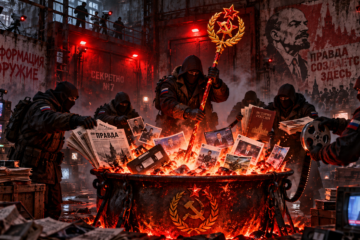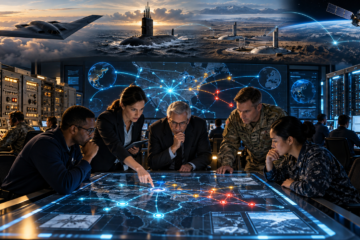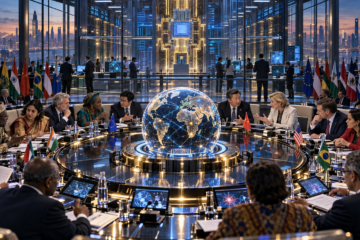
Experts call the current state of the world the third nuclear age, embodied by various emerging technologies. It is characterized by expanding nuclear arsenals, diminishing arms control agreements, and technological developments that have made it increasingly difficult to distinguish between war and catastrophic disasters. These changes necessitate not only an examination of the weapons being developed, but also of the disintegrating global rules-based order they reveal. The modernization of existing stockpiles and the expansion of nuclear weapons capabilities by emerging nations will require bold diplomatic steps, rather than aggressive actions, if the world is to move forward.
What Is the Third Nuclear Age?
The world can be divided into three eras of nuclear weapons history, each defined by distinct weapons dynamics and geopolitical relationships, and distinguished by major proliferation or treaty events of its time.
The first nuclear era was characterized by a bipolar rivalry between the United States and the Soviet Union during the Cold War, from 1945 to the late 1980s. At its peak, the number of warheads held by both countries is estimated to have reached around 60,000 in 1986. This era was marked by limited arms control agreements and significant arms racing.
The second nuclear era, spanning from 1991 to 2013, saw significant disarmament through bilateral U.S.–Russia treaties such as START I and New START, which reduced global warhead numbers by a considerable amount. However, this period was also marked by nuclear proliferation efforts by regional actors, including the nuclearization of South Asia, particularly India, followed by Pakistan, and then North Korea’s decision to pursue nuclear weapons.
Beginning in 2014, the third nuclear era emerged, typified by the current, chaotic, multipolar environment. Russia has unilaterally suspended participation in New START monitoring and verification, a treaty that expired on February 5th, 2026. Both the United Kingdom and France have commenced modernization and expansion of their nuclear forces. China is rapidly nearing an estimated 600 warheads, North Korea continues to test intercontinental ballistic missiles (ICBMs), and Russia has modernized its weapons systems and deployed short-range nuclear weapons in Belarus. Iran continues to signal that it is nearing the nuclear threshold, opacity persists regarding Israel’s nuclear capabilities, and the May 2025 conflict between India and Pakistan has created multiple additional flashpoints, all of which underscore the need for new international multilateral guardrails.
Current Global Nuclear Trends
The United States has initiated a $1.7 trillion nuclear triad modernization plan, which includes submarines, bombers, and land-based missiles. Russia has been testing nuclear-powered cruise missiles such as Burevestnik, while China is expanding its nuclear weapons capability at a rapid pace amid rising tensions over Taiwan.
In addition, strategic non-nuclear weapons, including hypersonic systems, AI-driven command structures, and missile defense, are contributing to an escalatory environment in which the nuclear ladder has become increasingly slippery to climb and equally difficult to descend. The Bulletin of the Atomic Scientists has set its “Doomsday Clock” at 89 seconds to midnight, the closest it has ever been since 1947, reflecting its assessment that the erosion of arms control, the expansion of nuclear capabilities, and the persistence of conflict have significantly increased the risk of nuclear catastrophe.
Escalating Global Nuclear Challenges
The U.S.-Russia arms control negotiations have ceased over Ukraine, and President Putin has reduced stated nuclear use thresholds. At the same time, U.S. military strikes against Iran have alarmed some observers who argue that such actions undermine norms governing sovereignty. NATO countries are increasingly exploring their own European deterrence capabilities.
A defining feature of the third nuclear age is the growing complexity of the strategic environment and the inability to manage global risks through simple bilateral frameworks.
Technological advancements that accelerate escalation risks include hypersonic weapons that challenge missile defense systems, artificial intelligence that may misinterpret launch indicators, and cyber operations that could inadvertently contribute to nuclear escalation—echoing historical false-alarm incidents in 1983. Meanwhile, China’s evolving relationship with Russia further complicates U.S. efforts to deter aggression across both Europe and the Asia-Pacific.
The Way Forward
With New START having expired, significant future limits on the number of nuclear weapons possessed by major powers appear unlikely, accelerating competition and instability. By the mid-2030s, the convergence of nuclear and advanced conventional capabilities may become normalized as tools of coercion rather than deterrence, while additional states may seek nuclear weapons should nonproliferation barriers erode. The Bulletin of the Atomic Scientists has identified the emergence of the “third nuclear age” as the top global risk in 2026.
Accordingly, new mechanisms for arms control and nuclear disarmament consistent with commitments made by major nuclear-weapon states under the NPT framework are urgently required. These include enhanced verification technologies, AI-assisted monitoring, restraints on the development of destabilizing new weapons, and sustained strategic-stability dialogue aimed at separating and disentangling nuclear and conventional escalation pathways. Additional measures to promote norms of responsible nuclear behavior are also necessary, although opposition from the five permanent members of the UN Security Council remains a significant barrier to progress. Ensuring the global security of radioactive materials must remain a priority.
The third nuclear age has placed humanity in unprecedented danger. Existing disarmament mechanisms have proven ineffective as new rivalries emerge, and technological changes accelerate. History demonstrates that diplomacy can work: New START reduced nuclear arsenals to their lowest levels since the early years of the first nuclear era. Today’s leaders must again prioritize cooperation and restraint, or risk allowing miscalculation to turn expanding arsenals into catastrophe. The alternative is too terrible to ignore.
Ms. Harsa Kakar is an Assistant Research Fellow at the Balochistan Think Tank Network (BTTN), Quetta. Views expressed in this article are the author’s own.