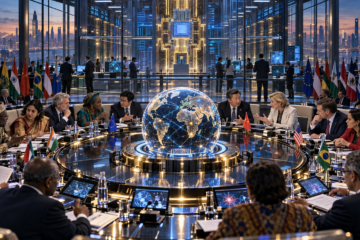
The death of the United States’ unipolar moment is exaggerated. Foreign policy experts claiming the United States is on the decline and international relations are headed to multipolarity are less than accurate. Pundits insist that China’s economic and military rise will allow the country to eclipse the United States and lead to the creation of new international institutions led by Beijing.
The results of the American air strikes on Iran’s nuclear facilities serves as a harsh reminder to those who believe multipolarity is the future of the world order. American military power is still unmatched.
Operation Midnight Hammer demonstrated the remarkable military power of the United States and President Donald Trump’s willingness to use it when an adversary crosses American red lines. The surgical strikes of American stealth aircraft and cruise missiles expertly showcased the awesome power of the American military.
The strikes were more than a display of power. They left no doubt that President Trump is laser focused and committed to protecting American vital interests. The strikes were also a message to allies and foes alike that the United States will stand by its allies when facing an existential threat, especially when that ally demonstrates a willingness to defend itself.
Even though the Trump administration used limited strikes against the nuclear facilities, the underlying message is clear. Red lines, deadlines, and ally support are back. Through the masterful use of deception, stealth, and precision, the American strike was unseen. Tehran’s subsequent retaliatory strikes were nothing more than preplanned and face-saving missile launches to placate domestic audiences.
The follow-on ceasefire agreement stands to put an end to Iran’s regional and nuclear ambitions and forces Iran and Israel to tamp down their hostilities to allow for a negotiated settlement. Interestingly, Iran’s allies effectively abandoned Tehran as the Ayatollah and the Iranian Revolutionary Guard Corps (IRGC) looked feckless and weak compared to the combined strength of Israel and the US.
China, Russia, and Iran’s Middle East proxies were nowhere to be found. The so-called “Axis of Resistance” is in tatters as the result of Israeli and American action. Whether or not Iran takes the opportunity to deescalate and seek a peaceful resolution remains to be seen. Regardless, Operation Midnight Hammer should be seen as a return to deterrence with Tehran and in the capitals of America’s adversaries worldwide.
Bolstering Alliances
On the heels of successful air strikes, President Trump received another geostrategic win as the North Atlantic Treaty Organization’s (NATO) member states agreed to spend 5 percent of gross domestic product on defense spending. NATO members, with the goading of President Trump, realized that Russian aggression necessitated greater commitment to defense.
Trump’s goal for increased defense spending is not to weaken NATO but to strengthen it. By requiring all members to carry a proportional share of collective defense, American leadership will only strengthen a once great alliance. Russia must reconsider its desire to once again expand its sphere of influence and control by force.
Alliances are based on shared values and commitments. President Trump made it clear that free riding is no longer an option. A strong NATO, with the needed capabilities and political will, can confront aggression and serve as a stabilizing force.
The Dealmaker
Finally, President Trump made it clear that he desires to be a peacemaker rather than a war maker. Thus, he is seeking to negotiate the end to conflicts around the globe.
First, the administration brokered a peace deal between the Democratic Republic of Congo and Rwanda to end decades of fighting. The administration states that the peace deal will include mechanisms that address the underlying causes of the conflict and pathways for reconciliation.
Second, Trump continues to work toward the resolution of conflict between Ukraine and Russia. While negotiating peace is proving more difficult than expected, the president continues to work toward an acceptable option.
In another significant turn of events, Trump’s dealmakers made overtures to Israel in pursuit of an end to the conflict in Gaza—hoping to end the conflict in the next few weeks. As part of ending the conflict, several Arab neighbors agreed to allow Gazans to immigrate to their countries.
Additionally, the Trump administration also plans to expand the Abraham Accords so that more Arab nations commit to resolving decades of conflict. Trump’s dealmaking goals are aspirational considering that much work remains to fulfill these goals. After decades of animosity, a two-state solution for the Arabs in Israel would be a welcome step toward a lasting peace.
Russia and China failed to provide any resolution to conflict in the Middle East and Africa. Russia has no ability to negotiate a peace deal considering its continued war on Ukraine. China’s domestic troubles coupled with its questionable usage of the Belt and Road Initiative are backfiring. Russia and China were unwilling to support their friends in need, whereas Washington sought to end conflict. So much for multipolarity.
The past few weeks show a marked contrast to years of wishful thinking and kicking the proverbial can down the road. Peace through strength, President Trump’s foreign policy agenda, seeks to deter adversaries and assure allies while avoiding new conflicts. Ending protracted conflicts through negotiated settlements may also prove a critical element of the Trump Doctrine. The combination of peace and military power may prove a winning combination.
Russia and China cannot achieve these goals. They lack the standing to do so. It should come as no surprise that all eyes are returning to Washington as the world’s leading power broker. Mark Twain once said in response to news stories he was dead, “The rumors of my demise are greatly exaggerated.” Much the same is true of America’s unipolar moment.
Todd Clawson is a retired naval officer with 28 years of service and combat tours in the Middle East, Horn of Africa, and South Asia. He holds a doctorate in defense and strategic studies from Missouri State University. The views expressed are his own.