Mutually assured destruction or MAD is not an American doctrine or military strategy. Those who believe MAD is how America deters nuclear-armed adversaries assume that any use of nuclear weapons by the United States will be massive, and that any alternative, such as limited nuclear use, will quickly escalate to a full-scale nuclear Armageddon.
As a strategy, MAD was considered but jettisoned by the United States 65 years ago. For example, President John F. Kennedy noted, “Above all, while defending our own vital interests, nuclear powers must avert those confrontations which bring an adversary to a choice of either a humiliating retreat or a nuclear war. To adopt that kind of course in the nuclear age would be evidence only of the bankruptcy of our policy, or of a collective death-wish for the world.” Kennedy succeeded in adopting a strategy short of all-out retaliation that came to be known as “flexible response,” which, in 1974, was fully developed by James Schlesinger and eventually codified in Presidential Defense Directive 59.
Whether the United States has 10,000 or 1,500 strategic nuclear weapons, American forces were designed to have a secure retaliatory capability at any level of conflict. The objective was to end any conflict as soon as possible and at the lowest level of destruction. The American objective was not to burn an adversary’s cities to the ground. American deterrence strategy was to hold at risk what the adversary valued most.
Critics of current deterrence strategy assume that no nuclear-armed adversary of the United States believes in “fighting” a nuclear war. So, the US should drop its long-held deterrence strategy and go back to MAD or something like it. At the same time, many of these critics join nuclear abolitionists to support nuclear weapons but only to deter, not engage, in warfighting. If conflict breaks out and these weapons will not be used in retaliation, then nuclear forces are off the table and reduced to a bluff.
The mistaken notion that the US has a MAD strategy plays into the hands of Russia and China. These two nations both seek to escalate or threaten to escalate in a crisis or conflict with the limited use of nuclear weapons. The objective is to get the United States to stand down and not come to the defense of her allies, a restraint to give Russia and China a strategic advantage.
Unfortunately, much of the current commentary on nuclear threats still assumes the US and its adversaries maintain a mutually assured destruction strategy as the best means to avoid any use of nuclear weapons. Annie Jacobson’s recent book, On Nuclear War: A Scenario, describes a mutually assured destruction strategy, which she assumes the US maintains, as simply MAD or crazy. She posits that any initial use of nuclear weapons would almost automatically result in the all-out use of such weapons, leading to nuclear winter and killing billions. As such, she calls for the entirety of American nuclear deterrence to be jettisoned.
Being in the deterrence business, it is important for Congress, the media, the executive decisionmakers in the military and Department of Defense to fully understand what deterrence, as practiced by the United States, entails and why it must be sustained.
To explain this requires a review of history and an understanding that adversaries of the United States and the West sought military advantage through enhanced nuclear weapons technology. Over time the challenge for the US to sustain deterrence changed. The Soviets sought to put nuclear weapons in space, then built a huge first-strike missile force, then deployed thousands of medium-range SS-20s to intimidate and split NATO, and, most recently, built a theater-strike capability to keep the United States and NATO from winning the war in Ukraine.
The US nuclear deterrent was never one size fits all and automatically fit for purpose. For example, the US and NATO faced a huge conventional military threat from the Soviet Union from the beginning of the Cold War on the plains of central Europe, a place called the Fulda Gap. The Soviet and Warsaw Pact tanks were not matched by American conventional forces. President Dwight D. Eisenhower did not wish to bankrupt the US treasury by building such a large and costly conventional military. The available alternative was to establish a nuclear umbrella over Europe, primarily aimed at Soviet tank armies. Thus, in the initial Cold War period, the US assumed a nuclear conflict would most probably grow out of an initial conventional war.
As technology improved, however, a threat emerged that could markedly change the correlation of forces between the United States and the USSR. The US still sought to deter a potential Soviet push into central Europe, but an additional threat was a potential Soviet pre-emptive first strike seeking to eliminate much of the American extended deterrent, followed up by a subsequent conventional invasion of Europe.
In 1963, the American strategic nuclear deterrent consisted of 6,000 nuclear warheads while the Russians had 600 warheads. As President Kennedy remarked, this strength, and particularly the newly deployed Minuteman missiles, were “my ace in the hole” that gave the United States the strategic advantage that peacefully ended the Cuban Missile Crisis.
However, by the time the next decade ended, the 1972 Strategic Arms Limitation Talks (SALT) “arms control” treaty process was implemented and the USSR largely caught up, deploying 7,800 warheads compared to the US force of 8,700 warheads. Most worrisome was the new Soviet land-based missile force of 3,000 warheads on highly accurate SS-18s—with the overall Soviet nuclear force projected to grow to over 24,000 warheads by 1993.
As Secretary of Defense Melvin Laird told Congress in 1974, “the Soviets are going for a first strike force and there is no doubt about it.” The SS-18 eventually held at risk the entirety of the US land-based intercontinental ballistic missile (ICBM) force. This was the only American deterrent force that was sufficiently accurate to target key Soviet leadership and military targets without requiring “city busting.”
The US stopped deploying land-based missiles at 1,050 and associated warheads at around 2,000—assuming the USSR would show equal restraint. But Moscow built a huge land-based ICBM force that could take out the nation’s Minuteman missiles, leaving the US without the ability to hold key Soviet assets at risk. This perceived imbalance was known as the “window of vulnerability” where the US faced the prospects of a Soviet-initiated first strike that would leave US leaders exactly where President Kennedy worried it would.
The US solved the strategic equation of the window of vulnerability, the Soviet empire collapsed, the US added the Trident II D-5 submarine-launched ballistic missile and Peacekeeper land-based ICBM, Soviet SS-20s were banned, and the Strategic Arms Reduction Treaty (START) arms control process brought Russian warheads down to under 2,000.
In April 1999, Russian President Boris Yeltsin, economically unable to rebuild a Soviet-era nuclear force, decreed that Moscow develop highly accurate, small, low-yield, battlefield nuclear weapons, which his successor, Vladimir Putin, did in earnest. As former Vice Chairman of the Joint Chiefs of Staff General John Hyten warned, these theater nuclear weapons were designed to “escalate to win” a conventional conflict or crisis between Moscow and Washington.
Putin thinks the US will not respond to the small-scale use of nuclear weapons because the US will not want to risk escalation and the possibility of strategic nuclear exchange. That is why Putin made exactly these threats over NATO’s intervention in the war against Ukraine.
Both Russia and China assume the relative weak theater nuclear forces the US maintains are now insufficient to match escalatory threats from Moscow and possibly Beijing. This point was emphasized by the 2023 Strategic Posture Commission report in laying out the opening of a new window of vulnerability.
The US is indeed now developing a greater theater nuclear deterrent to close the technology gap. However, simply adding to America’s conventional deterrent is not sufficient. As military leadership has repeatedly emphasized, if adversarial nuclear forces are introduced into a conventional conflict, the American advantage ceases. In short, conventional military leverage disappears.
The central tenets of mutually assured destruction no longer apply. MAD was jettisoned long ago. More importantly, America’s adversaries employ credible threats with the nuclear forces. New technology and expanding adversary arsenals are undermining the limited deterrent value of the American nuclear arsenal, a fact that must change if the United States seeks to ensure it does not find itself embroiled in a conflict where capitulation or Armageddon are the nation’s only options.
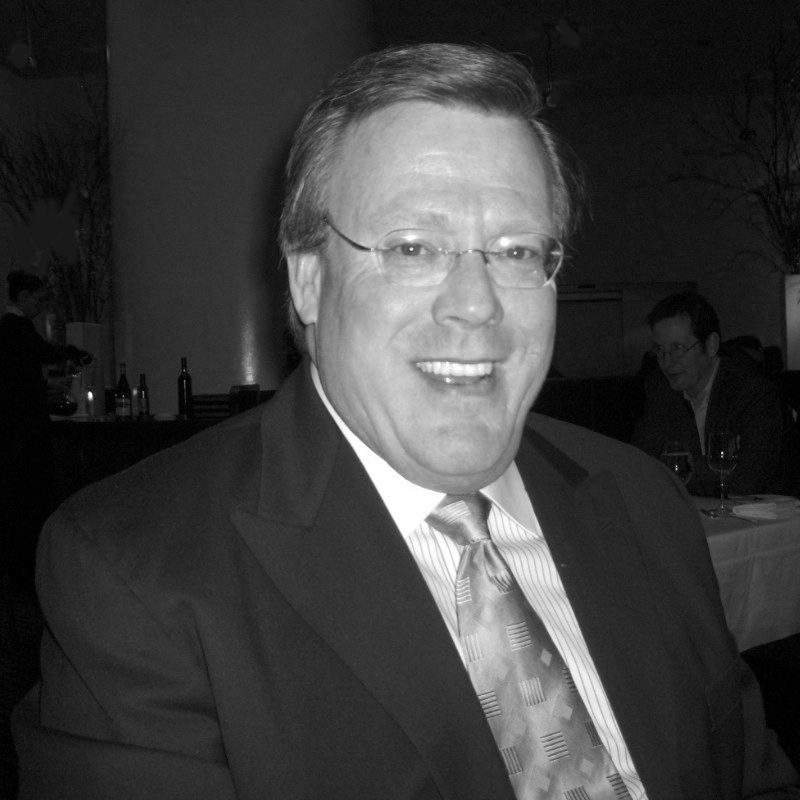
Peter Huessy is a Senior Fellow at the National Institute for Deterrence Studies.


About the Author

Peter Huessy
Mr. Peter Huessy is President of his own defense consulting firm, Geostrategic Analysis, founded in 1981, and through 2021, Director of Strategic Deterrent Studies at the Mitchell Institute on Aerospace Studies. He was the senior defense consultant at the National Defense University Foundation for 22 years. He was the National Security Fellow at the AFPC, and Senior Defense Consultant at the Air Force Association from 2011-2016.
Mr. Huessy has served as an expert defense and national security analyst for over 50 years, helping his clients cover congressional activities, arms control group efforts, nuclear armed states actions, and US administration nuclear related policy, budgets, and strategies, while monitoring budget and policy developments on nuclear deterrence, ICBM modernization, nuclear arms control, and overall nuclear modernization.
He has also covered nuclear terrorism, counterterrorism, immigration, state-sponsored terrorism, missile defense, weapons of mass destruction, especially US-Israeli joint defense efforts, nuclear deterrence, arms control, proliferation, as well as tactical and strategic air, airlift, space and nuclear matters and such state and non-state actors as North Korea, China, Iran, Syria, Venezuela and Hezbollah, Hamas, and Al Qaeda. This also includes monitoring activities of think tanks, non-governmental organizations, and other US government departments, as well as projecting future actions of Congress in this area. His specialty is developing and implementing public policy campaigns to secure support for important national security objectives. And analyzing nuclear related technology and its impact on public policy, a study of which he prepared for the Aerospace Corporation in 2019.