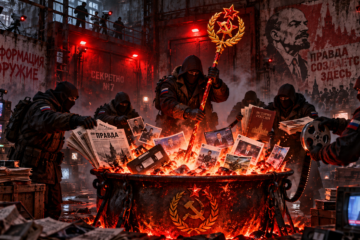

The Atlantic Council’s recent report detailing the outcomes of the Guardian Tiger tabletop exercises revealed a sobering scenario. If North Korea were to conduct a tactical nuclear strike against South Korea, the United States may refrain from responding in kind. This restraint, while aligned with American declaratory policy and a deep-rooted aversion to nuclear escalation, risks a dangerous erosion of credibility in America’s extended deterrence commitments in East Asia. Given complex trilateral dynamics with China and North Korea, and amid increasing doubts by American allies, there is a growing need to reconsider whether credible American deterrence can be maintained without a flexible, proportionate, and survivable tactical nuclear response option.
This issue is not new. In his 1957 book Nuclear Weapons and Foreign Policy, Henry Kissinger made a controversial, yet analytically compelling, argument for the possible utility of tactical nuclear weapons in limited wars. He warned that massive retaliation was neither credible nor effective for deterring limited aggression and that a rigid dichotomy between conventional and strategic nuclear responses risked inviting coercion at the lower rungs of the escalation ladder. For Kissinger, introducing the possibility of limited nuclear use was not a call to war, but a recognition of strategic reality; the ability to escalate with restraint could deter adversaries from escalating first.
Fast forward to the 2030 scenarios modeled in Guardian Tiger I and II, and Kissinger’s insights remain disturbingly relevant. In the exercise, North Korea carried out a low-yield nuclear strike targeting South Korean naval vessels. American decision-makers, faced with the risk of horizontal escalation with China and the lack of consensus among allies, struggled to identify a proportional yet credible response. The idea of a retaliatory tactical nuclear strike was floated, but the simulated American leadership hesitated, reflecting both doctrinal ambiguity and an operational gap in American nuclear capabilities.
The risks of such hesitation are manifold. First, American restraint may be misinterpreted as indecision or weakness, particularly by allies like South Korea and Japan, who are directly exposed to North Korean and Chinese threats. Second, it creates an opening for adversaries to believe they can escalate to the nuclear level without inviting proportional retaliation. Third, it undermines the entire architecture of extended deterrence that underpins regional security.
Critics will rightly point out the perils of normalizing nuclear use. Introducing tactical nuclear weapons into a conflict zone invites moral hazards, increases the risk of miscalculation, and breaks long-standing nuclear taboos. It also challenges existing declaratory policies, such as the 2022 P5 Joint Statement affirming that “a nuclear war cannot be won and must never be fought.”
But these arguments, while valid in principle, must be weighed against the operational reality that a low-yield nuclear strike by an adversary may not be deterred by threats of massive retaliation. As the Atlantic Council report noted, North Korea’s nuclear doctrine increasingly incorporates elements of pre-delegated authority, tactical nuclear use, and efforts toward a more survivable second-strike posture. If the United States signals that it will not respond proportionally to a limited nuclear attack, North Korea may calculate that it can use nuclear weapons to coerce the South or constrain American action without triggering regime-ending consequences.
Moreover, the credibility problem is not confined to North Korea. China, observing Washington’s reluctance to respond in kind, may also be emboldened to engage in horizontal escalation, confident that the United States’s nuclear threshold is politically—and perhaps operationally—immobile. This perception could unravel the strategic coherence of integrated deterrence.
To address these challenges, US Forces Korea (USFK) and Indo-Pacific Command should adopt a more robust approach across multiple dimensions. First, the United States should consider forward-deploying platforms capable of delivering low-yield nuclear weapons. This could include the reintroduction of dual-capable aircraft or sea-based assets positioned in or near the Korean Peninsula. Such deployments must be both survivable and possess the ability to clearly signal an adversary of will, while being fully integrated into bilateral operational planning with the Republic of Korea (ROK).
Second, escalation options must be clarified through updates to American declaratory policy. This does not mean issuing public ultimatums or fixed thresholds but rather ensuring that adversaries understand the United States is willing to conduct proportional nuclear responses if deterrence fails. Strategic ambiguity must not become strategic paralysis.
Third, while the US and South Korea launched the Nuclear Consultative Group (NCG) in 2023 to enhance extended deterrence coordination, further institutionalization is needed. A structure modeled more closely on the North Atlantic Treaty Organization’s (NATO) Nuclear Planning Group would help deepen transparency, signal unity of purpose, and reduce the risk of fragmented responses during crises.
Fourth, both US and ROK forces must be equipped and trained to operate in the aftermath of a limited nuclear strike. This includes rehearsals and exercises focused on base survivability, radiological detection and decontamination, logistics continuity, and the resilience of command-and-control (C2) systems.
Fifth, strategic communication must be strengthened. Clear and consistent messaging to both adversaries and allies is critical. Deterrence depends not only on military capabilities, but also on the perceived credibility of those capabilities and the intentions behind them.
Ultimately, the goal of these measures is not to normalize the use of nuclear weapons, but to reinforce the threshold against their use by making deterrence more credible and responsive.
If that threshold is ever crossed and the United States fails to respond proportionately, the credibility of its extended deterrence architecture could unravel. The Guardian Tiger exercises highlight this grim possibility and should serve as a clarion call to action for policy and defense leaders alike.
As Kissinger warned in 1957, the danger of total war arises not so much from a deliberate decision to embark on it as from a series of actions which, though rational in themselves, cumulatively lead to disaster. The United States must ensure that its rational desire to avoid nuclear escalation does not lead to an irrational loss of deterrence. Tactical nuclear flexibility, responsibly exercised and credibly signaled, may be the painful but necessary insurance policy to uphold peace in East Asia.
Dr. Ju Hyung Kim, President of the Security Management Institute, a defense think tank affiliated with the South Korean National Assembly, is currently adapting his doctoral dissertation, “Japan’s Security Contribution to South Korea, 1950 to 2023,” into a book.


About the Author

Ju Hyung Kim
Dr. Ju Hyung Kim currently serves as a President at the Security Management Institute, in the South Korean National Assembly. He holds a doctoral degree in international relations from the National Graduate Institute for Policy Studies (GRIPS) in Japan, a master’s degree in conflict management from the Johns Hopkins University School of Advanced International Studies (SAIS), and a degree in public policy from Seoul National University’s Graduate School of Public Administration (GSPA).