
Published: August 31, 2926
As the United States heads toward another set of midterm Congressional elections in November 2026, issues related to nuclear weapons, including deterrence, arms control, and nonproliferation, will be important. Whether candidates will give issues of nuclear policy and strategy the attention that they deserve is another matter. Historically midterms have tended to focus on the state of the economy and the personalities of the respective candidates. The 2026 midterms should also see debates about foreign policy issues and U.S. national security.
The first issue that U.S. politicians must address is the emerging new world order and the coalition of China, Russia, Iran, and North Korea (CRINK) opposed to American and allied vital interests worldwide. In this regard, the efforts to set back Iran’s progress toward development and deployment of nuclear weapons will continue to meet with resistance among the other CRINKS, each with its own nuclear arsenal and an ongoing program of nuclear modernization. Russia remains the country with the world’s largest numbers of operationally deployed and stored nuclear warheads. China is rapidly building new long-range delivery systems and warheads on a trajectory that will enable it to deploy some 1,500 strategic nuclear weapons on land based, sea based and airborne launchers by 2035. North Korea is also increasing and diversifying its inventory of nuclear weapons and launchers in addition to supporting Russia’s war against Ukraine with thousands of DPRK infantrymen.
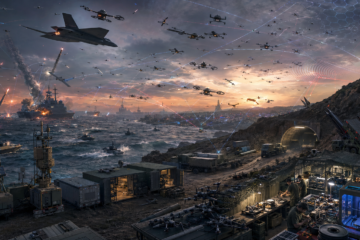
Given the preceding context, the U.S. must anticipate and plan for the contingency of two simultaneous large scale conventional wars in Europe and Asia. Either or both conflicts would be fought under the shadow of potential nuclear first use. Since the start of the Russian war against Ukraine in February 2022, Vladimir Putin has repeatedly warned of Russia’s willingness to use tactical nuclear weapons in various circumstances. Russia has in fact exercised its nuclear command and control systems in various war games over the past several years as a direct strategic signal. NATO has responded with significant improvements in its military preparedness for protracted conventional war, and by enhancing its protocols for sharing U.S. and allied nuclear weapons with other members of the alliance in time of need. France has adopted a revised nuclear policy doctrine that includes a more explicit commitment for its nuclear force de dissuasion to alliance wide deterrence in addition to deterrence of attack against French state territory. In the Far East, China is relatively ambiguous about the conditions under which it might engage in nuclear first use, but it would be safe to assume that the option remains open in case of a major U.S. military intervention to oppose a Chinese takeover of Taiwan.
Second, and related to the preceding discussion about the possible behavior of existing nuclear powers, is the prospect of additional countries that decide to join the ranks of nuclear weapons states. In the Middle East. and especially in the aftermath of Operation Epic Fury and Iran’s reactions, some countries may be rethinking their commitment to nuclear abstinence. The most immediate concern among proliferation experts is Saudi Arabia. Riyadh has already decided to go forward with an ambitious civilian nuclear infrastructure plan as a hedge against future uncertainty in oil markets. At a certain level, this program would open the door to weaponization if the kingdom felt sufficiently threatened by Iran, since the latter has already targeted Saudi economic infrastructure and U.S. military bases throughout the region. In Asia, the threat posed by China and North Korea might increase interest in nuclear weaponization in Japan and South Korea. Although in theory, the U.S. nuclear umbrella extends as a deterrent that protects Japan and South Korea, a rising Chinese nuclear superpower and an unpredictable North Korea could shift public opinion and government policy in Seoul and-or Tokyo.
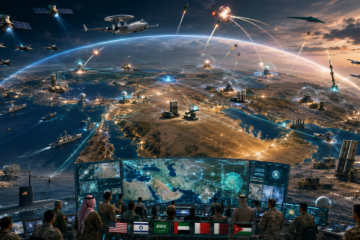
In addition to the preceding challenges posed for U.S. national security and nuclear related defense policy, a third problem is the spread of technologies that are potential game changers for conventional war and/or nuclear deterrence. These technologies include hypersonic weapons, drones, artificial intelligence with strategic mind games, and space-based weapons.
Hypersonic weapons reduce the time for opponents to close the OODA loop (observe, orient, decide, act loop) before disaster strikes. Drones have already changed the nature of the conventional battlefield in Ukraine and in the Middle East in myriad ways. Conceivably, they could eventually be nuclear armed with tiny nukes or mini nukes and even more precisely targeted than hitherto. Artificial intelligence will have enormous implications for the art of war, and deterrence: the applications are too numerous to mention in a single compass. But one immediate application of AI to strategy is the creation of strategic mind games for the purpose of deception. False images of political leaders making fake statements about military and political issues are already on offer. Future creative cyber warriors may, in the manner of William Randolph Hearst and the Spanish American war, be able to instigate public anger against one or more regimes and propel national leadership over the edge of brinkmanship into conventional or even nuclear conflict. Finally, space is now officially recognized as a domain for potential warfighting (along with land, sea, air, and cyberspace) and the deployment of space-based weapons by major powers is inevitable. Weapons once based in space will have to be defended against potential attacks from enemy space or terrestrially based weapons. The U.S. currently and prospectively depends at least partly on the safety and reliability of space-based assets for navigation, warning, command and control, and other components of the brain and nervous system for nuclear deterrence. Although the current environment for nuclear or space arms control among the great powers seems unpropitious presently, an eventual regime of “rules of the road” for orbital components of strategic power will have to be designed and agreed upon to avoid unacceptable celestial (and related terrestrial) chaos.
In such a chaotic and uncertain strategic environment, citizens should know where their leaders stand on the challenges posed by foreign policy and nuclear war. Voters would be well served to demand those answers before a crisis arrives.
Stephen J. Cimbala is Distinguished Professor of Political Science at Penn State Brandywine and the author of numerous works on nuclear deterrence, arms control, and military strategy. He is a senior fellow at NIDS and a recent contributor to the Routledge Handbook of Soviet and Russian Military Studies edited by Dr. Alexander Hill (Routledge: 2025). The views of the author are his own.



About the Author

Stephen Cimbala
Dr. Stephen Cimbala is Distinguished Professor of Political Science at Penn State university, Brandywine. He is currently a senior fellow with the National Institute for Deterrence Studies.