
The world is entering a new age of nuclear competition, characterized by the breakdown of nuclear arms control and the return of great power competition and conventional war to Europe. Further compounding this issue is the increasing normalization of nuclear threats in both Europe and the Indo-Pacific, the rapid growth of Chinese and North Korean nuclear arsenals, and the ongoing military modernization and expansion amongst America’s adversaries.
The return of great power competition is especially concerning in the Indo-Pacific, with the expansion of Chinese military capabilities eroding the status quo of a regional rules-based order. An evolution in Chinese strategic objectives has created a shift among American defense planners and strategists, who now see China as the primary adversary of the United States. As written within the 2022 U.S. National Defense Strategy, “The [People’s Republic of China] PRC remains our most consequential strategic competitor for the coming decades… this conclusion [is based] on the PRC’s increasingly coercive actions to reshape the Indo-Pacific region and the international system to fit its authoritarian preferences, alongside a keen awareness of the PRC’s clearly stated intentions and the rapid modernization and expansion of its military.”
In the Cold War, Western strategists and planners spent most of their intellectual capital examining the challenges posed by the Soviet Union, in particular, the deterrence challenges posed by the Soviet nuclear arsenal. Policymakers subsequently developed defensive strategies and associated concepts including extended deterrence and force posturing in Europe and the role that the American industrial, economic, and military could play. Not least among these considerations was the role of U.S. extended deterrence commitments to its allies in NATO, particularly those allies on the front lines of the Cold War stand-off in Europe.
Put simply, extended deterrence refers to the stated policy to defend a foreign ally, including the use of nuclear weapons in said defense, as part of a mutual defense treaty. Many policies supported the credibility of U.S. extended deterrence commitments in Europe, to include public statements by American presidents, the presence of American military personnel abroad, and U.S. nuclear weapons forward deployed in Europe. Extended nuclear deterrence, along with the forward deployment of vast amounts of conventional power, was a central element of America’s defense of its European allies. One of the factors that strengthened the conventional defensive posture of Europe is that Europe enjoys a certain amount of strategic depth.
Strategic depth is defined as the space available within a territory to halt an adversary attack, execute a counterattack, and end the conflict on terms acceptable to the counterattacking party. During the Cold War, NATO enjoyed a regional depth which allowed not only for NATO forces to fall back to more defendable geographic features in the face of a conventional attack, such as the Rhine, the Rhone, or even the Pyrenees, but strategic depth within Europe allowed either side to carry out strikes on European soil without escalating or expanding the conflict to a nuclear war on each other’s homelands.
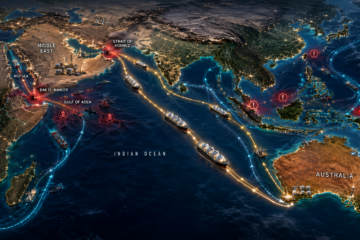
While this geography served U.S. and allied interests in the Cold War, the United States lacks a similar level of strategic depth in the Indo-Pacific as it confronts the prospects of a large-scale conflict with China. Much of the geography in a U.S.-China conflict would take place over the open ocean and skies of the Western Pacific. As such, there are few defendable terrain features such as rivers or mountain ranges behind which an actor can rest, reset, and prepare for a counterattack.
Just as importantly, a battlefield in the Western Pacific means that there are fewer options for the distribution of basing. American and allied bases would therefore have to generate combat operations from a limited number of high priority bases in a conflict. The lack of defensible features and small number of high-value bases is in many ways the opposite condition of what the United States and its NATO allies experienced in the Cold War.
In contrast, China has enormous strategic depth due to its ability to generate combat power from any number of bases, launch sites, or ports along its enormous Pacific coast and its deep hinterland. In the Western Pacific, U.S. allies and partners are dispersed and in some cases thousands of miles away from each other, with neutral and non-aligned states dotted in between. As a result of the United States’ limited number of bases, owing to the scarcity of permanent land features in the Western Pacific, China can focus on a small number of critical targets to diminish American and allied combat effectiveness.
Further, the limited number of in theater bases increases the demands and stress on an aerial fleet and the logistics involved in keeping U.S. forces adequately supplied. It also makes for significantly longer ship and submarine transit times to and from more distant resupply points. Already in 2015 there was the issue of the rate at which missiles can be launched.
To counter China, the number and availability of sensor resources that can be devoted to integrated air and missile defense systems versus other missions must increase given the vertical proliferation of such systems. Also, the capacity of combat logistics forces needed to cycle ammunition ships between rear bases and forward reloading areas, maintain long-range, high-capacity carrier-based aerial refueling, and to sustain different operational concepts over prolonged periods of conflict must be expanded.
The United States, Japan, and Australia should consider pre-positioning substantial amounts of military capabilities directly relevant to deterrence operations, such as missile defense capabilities, fuel, and conventional munitions, in each other’s territories to create targeting dilemmas for China. Doing so would not only enhance knowledge of deterrence methods and challenges between allies in theater that are vastly different from Western Europe during the Cold War but also create existential misery for PRC defense planners.
Regardless of personal preference, complex issues related to nuclear strategy are now central in the Indo-Pacific region. The U.S. and its allies must deliberately evaluate the profound responsibilities that come with being members of a nuclear alliance.
Robert Peters is a Senior Research Fellow for Strategic Deterrence in The Heritage Foundation’s Allison Center for National Security. Prior to joining Heritage, Peters served as the lead strategist at the Defense Threat Reduction Agency, where he oversaw the office that developed the Agency’s five-year strategy, conducted the Agency’s research and tabletop exercise program, and executed Agency-level program evaluations. Dr. Christine Leah is a Fellow at the US National Institute for Deterrence Studies and has worked on nuclear issues at Yale, MIT, and RAND and in London, Singapore, and Canberra. She is the author of The Consequences of American Nuclear Disarmament and Australia and the Bomb. Views expressed by the author’s are their own.


About the Author

Robert Peters
Robert Peters is a Senior Research Fellow for Strategic Deterrence in The Heritage Foundation’s Allison Center for National Security. Prior to joining Heritage, Peters served as the lead strategist at the Defense Threat Reduction Agency, where he oversaw the office that developed the Agency’s five-year strategy, conducted the Agency’s research and tabletop exercise program, and executed Agency-level program evaluations.

Christine M. Leah
Dr. Christine Leah is a Fellow at the US National Institute for Deterrence Studies and has worked on nuclear issues at Yale, MIT, and RAND and in London, Singapore, and Canberra. She is the author of The Consequences of American Nuclear Disarmament and Australia and the Bomb.

At one point we had a base on almost every Pacific island.
Stupid political leadership gave them up over the last decades.